
Moore County Criminal History Checks
No one office holds every Moore County criminal record. A pending felony belongs with the District Clerk, while a Class A or B misdemeanor belongs with the County Clerk and County Court at Law. Fine-only city cases stay with the municipal court in Dumas, Cactus, or Sunray. The Moore County Sheriff handles sheriff reports, jail records, and current county custody. Texas DPS maintains the statewide Computerized Criminal History repository.
Start with a full name, spelling variants, date of birth when lawfully available, an approximate date, and the place where the event occurred. A case number, incident number, or booking number makes the search much more precise. Moore County's County Clerk warns that staff do not conduct open-ended research or guarantee a broad name search, so a focused request is far more useful.
- Identify whether the needed record is an arrest report, booking entry, court case, warrant, or statewide history.
- Search re:SearchTX for a court lead, then note the court and case number.
- Call the correct Moore County clerk or city court to confirm the status and document availability.
- Contact the sheriff separately for custody, booking, or sheriff-created incident material.
- Order a certified court copy or a fingerprint-based personal review when source-level proof is needed.
That sequence keeps a Moore County search tied to official records. It also prevents a common error: treating one silent portal as proof that nothing exists. Moore County court coverage can vary in the statewide interface, Moore County jail data has no local public roster, and Moore County police reports remain with the agency that wrote them. When an online lead is thin, a narrow phone or written request is the next step. Record the office contacted, the date, and the exact file requested so later checks can follow the same trail.
Moore County Criminal Record Counters
The official Moore County courthouse page points to a system that is close in distance but split in law. The District Clerk sits in Room 109 and keeps felony files from the 69th Judicial District Court. The County Clerk sits in Room 107 and keeps Class A and B misdemeanor files from the County Court at Law. A municipal citation does not move to either room merely because the courthouse is nearby.
Moore County's official courthouse image shows the public starting point for many Moore County criminal records.
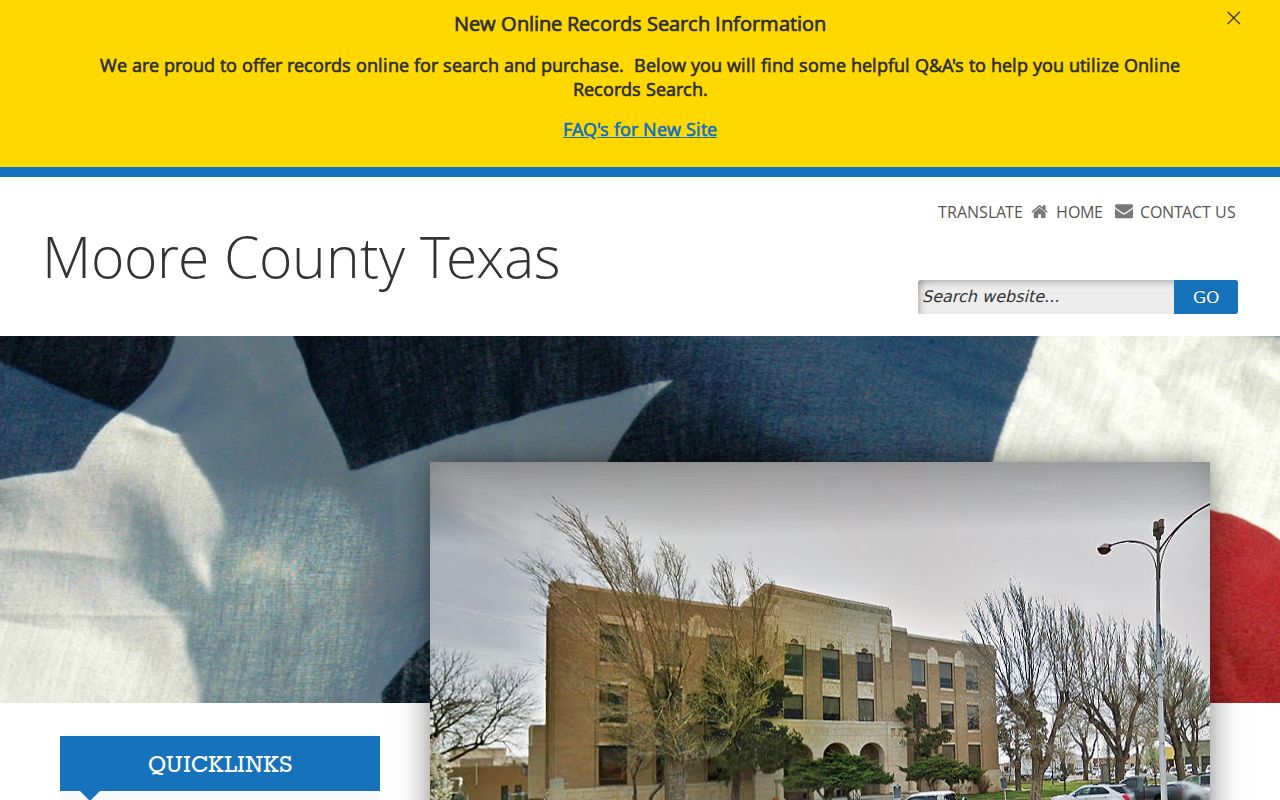
The image also highlights the county's instruction to call about upcoming County Court at Law dockets, which matters because no local searchable criminal docket is published.
District Clerk
715 S. Dumas Ave., Room 109
Dumas, TX 79029
806-935-4218
Mon.–Thu. 8:30–5; Fri. 8:30–noon
County Clerk
715 S. Dumas Ave., Room 107
Dumas, TX 79029
806-935-2009 or 806-935-6164
Call for current counter hours
Sheriff and Jail
700 S. Bliss Ave.
Dumas, TX 79029
806-935-4145
Call before a records visit
Official Background Checks in Texas
The Texas Department of Public Safety Crime Records Service offers two distinct paths. Its public Criminal History Search is a name-based search of convictions and deferred adjudications reported to DPS. It is not a complete fingerprint-linked rap sheet. For a review of one's own Texas history, DPS directs the person through FAST fingerprint capture at an IdentoGO location.
The public name-search screen costs one $3 search credit, plus the portal's posted card-processing charge. A name match can be ambiguous, especially with common names. A FAST personal review uses fingerprints to tie the result to the person. Moore County research did not confirm a permanent enrollment site, so the live vendor locator must be checked before travel.
| Official product | Best fit | Published cost |
|---|---|---|
| DPS name search | Public conviction and deferred-adjudication subset | $3 credit plus posted processing |
| FAST personal review | One's own fingerprint-linked Texas record | Shown during service-code enrollment |
| FBI Identity History Summary | One's own FBI-maintained identity history | $18 electronic request, plus possible fingerprint fees |
| Moore County clerk copy | Local case document or certified outcome | Local amount not published |
Moore County Fingerprint Record Review
The IdentoGO enrollment interface begins the FAST appointment and location process.

Because locations and hours change, this live screen is safer than relying on an old Dumas address. Use the DPS service code for Review of Personal Criminal History, bring accepted identification, complete fingerprinting, and follow the delivery instructions tied to that service.
DPS also explains the correction path for an identity-linked record. Obtain the fingerprint review first, identify the disputed arrest cycle, and collect a certified dismissal, judgment, or other source document from the Moore County clerk or arresting agency. A screenshot from a public name search does not carry the same weight. If a court disposition is missing, ask the clerk both for a certified copy and about disposition reporting to DPS.
Kinds of Criminal Records
Each Moore County criminal record answers a narrower question. Police and sheriff incident reports describe allegations and investigation. An arrest report states why an officer took someone into custody. The jail register documents intake and release. A charging instrument states what the prosecutor brought to court, while the court file shows motions, hearings, disposition, and sentence.
- Arrest and booking records: held by the arresting agency and Moore County jail, with booking charges that may later change.
- Court case files: held by the clerk for the court that heard the matter.
- DPS criminal history: fingerprint-supported arrest cycles paired with reported outcomes, subject to public access limits.
- Warrant records: maintained at the issuing court and law-enforcement level under provisions such as Texas Code of Criminal Procedure Chapter 15, with no county portal confirmed.
- Custody and supervision data: divided among the county jail, TDCJ, the local CSCD, and parole authorities.
A registry record is another separate product. The Texas Public Sex Offender Registry combines local registration data with statewide public fields. Court routing also follows the offense level described in Texas Penal Code Chapter 12. Neither should be inferred from a general arrest search.
Moore County Arrest Record Flow
A Moore County arrest begins with the agency that made it. The booking agency records identity, a photograph, fingerprints, arrest charges, and custody details. A magistrate then addresses probable cause, warnings, counsel, and bond. The 69th Judicial District Attorney reviews felony submissions, while the proper prosecutor handles lower cases. The clerk creates the litigation file only when a charge reaches that court.
Record flow: Arresting agency › Moore County jail › prosecutor › court clerk › Texas DPS CCH.
Those steps do not always appear online at the same time. DPS's 2026 compliance report includes separate Moore County arrest, prosecutor, and court-action counts, which measure reporting completeness rather than crime. A local final order may exist before the state cycle updates. A booking may remain even if prosecutors file no case. Verify the part that matters with its custodian.
Moore County Criminal Records: What They Contain
A Moore County criminal record may contain identifiers, events, or outcomes, depending on its source. The court file is strongest for the filed charge and final judgment. The arresting agency is strongest for the incident narrative and arrest basis. The jail register is strongest for custody dates. DPS links reported events by fingerprint and tracking control data.
| Name & Identifiers | Names, aliases, date of birth, and agency identifiers, with protected data redacted from public copies. |
|---|---|
| Arrest / Booking Data | Agency, date, place, charge, intake number, bond, holds, release, or transfer. |
| Charges & Statutes | Complaint, information, or indictment and the cited Texas offense. |
| Disposition | Conviction, dismissal, acquittal, no-bill, or deferred adjudication as actually entered. |
| Sentence | Jail or prison term, fine, restitution, or community supervision in the judgment. |
| Custody / Supervision | County release, TDCJ placement, parole information, or a court order imposing supervision. |
Protected fields do not become public merely because another part of the file can be inspected. Social Security numbers, driver-license data, medical facts, some victim details, juvenile information, and material covered by an expunction or nondisclosure order may be removed or withheld. Ask for the field or document actually needed, then compare it with the source record before drawing a conclusion.
Three Moore County Record Layers
Arrest, case, and rap sheet are not interchangeable terms. An arrest record shows the initial event and the officer's stated basis. A court case file shows the charge the State actually filed and how the judge or jury resolved it. A DPS rap sheet joins fingerprint-supported cycles with the outcomes agencies report. The public DPS name product reveals only the portion Texas law makes public through that service.
- Disposition
- The result of a charge, such as dismissal, acquittal, conviction, or deferred adjudication.
- Indictment
- A felony charging instrument returned by a grand jury.
- Information
- A prosecutor-filed charge commonly used for Class A or B misdemeanors.
- Deferred adjudication
- Community supervision while a finding of guilt is deferred. It does not erase the record.
- Nondisclosure
- An order that limits public release while allowing access by specified agencies.
Read the final judgment rather than guessing from a booking charge. The Moore County court case lookup explains how felony and misdemeanor files split between local clerks.
Texas Public Access Laws
The Texas Public Information Act applies to existing records held by agencies, but it does not force an office to answer questions or create a new report. A request should name the record, date range, location, agency, and any known number. Court case files are obtained from the clerk under the law and rules that govern those files. Judicial administrative records are a different category.
The Attorney General's TPIA overview explains the public request process and withholding procedure.
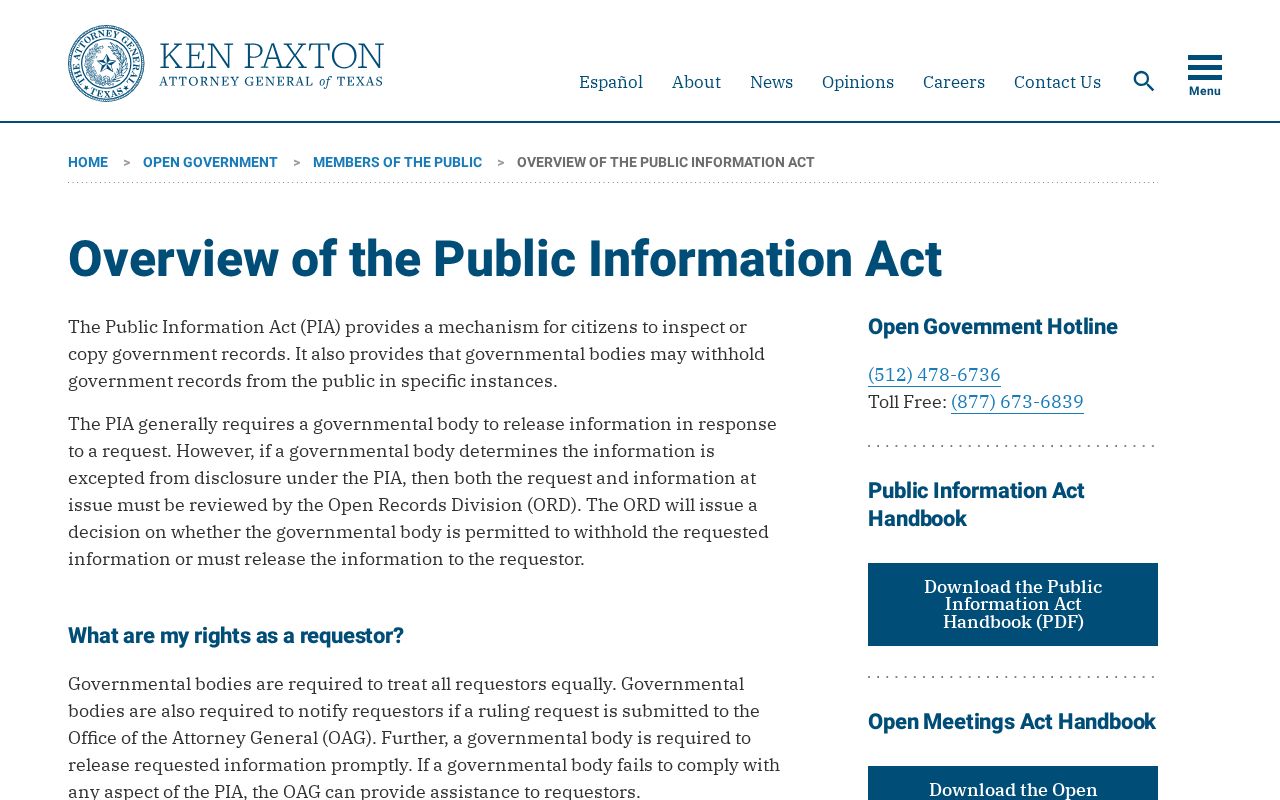
The state guidance supports a focused Moore County request and an itemized estimate before a large copy order.
Key statutes:
Government Code Chapter 552 gives access to public information and sets duties and exceptions.
Government Code §411.135 authorizes public access to specified DPS conviction and deferred-adjudication data.
Code of Criminal Procedure Chapter 55A governs current Texas expunction.
Code of Criminal Procedure Chapter 62 controls sex-offender registration and public fields.
Moore County Criminal Record Requests
The Moore County Sheriff does not publish a separate records portal, form, email, fee table, or turnaround promise. Begin at 700 S. Bliss Avenue or call 806-935-4145 and ask for the public-information contact. Dispatch at 806-935-2151 is an operational route, not a confirmed records desk. Describe an existing arrest report, offense report, booking sheet, jail-register entry, warrant return, CAD log, audio file, or body-camera recording.
| Channel | Moore County use | Preparation |
|---|---|---|
| Sheriff counter or phone | Booking, jail, sheriff report, custody, warrant routing | Name, date, record type, and known number |
| Written TPIA request | Existing agency records and releasable media | Date, time, place, delivery choice, and cost limit |
| District Clerk | Felony case documents | Case number, name, year, and requested filing |
| County Clerk | Class A/B misdemeanor documents | Narrow request because staff do not perform broad research |
Body-camera requests need the date, approximate time, specific location, and at least one known subject. Protected victim details, juvenile material, active-investigation information, medical data, and expunged or nondisclosed records may be withheld or redacted.
Moore County Custody Record Searches
No official Moore County online jail roster was located. Call the sheriff for current custody, then use the official VINELink route for notifications. A county-jail absence may mean release, transfer, or a data gap. It does not establish that the case was dismissed. For a sentenced state prisoner, switch to the TDCJ Online Inmate Search.
TDCJ accepts a last-name search, with first name, sex, and race as narrowing fields, or a TDCJ or SID number. Its result can show the facility, offense, county of conviction, sentence, projected release date, and parole information. The state locator does not cover current Moore County jail custody. The Moore County arrest search gives the full sheriff, agency-request, clerk, and state fallback chain.
Note: Call the sheriff before using any deposit, mail, phone, or visitation vendor because Moore County has not published those providers.
Moore County Highway Record Sources
U.S. Highways 87 and 287 meet near Dumas, so the agency that creates a traffic or crash record depends on the exact location and officer. Dumas Police, the Moore County Sheriff, or Texas DPS Highway Patrol may be the custodian. An incident or arrest report stays with that agency, while a resulting criminal charge moves to the proper court.
The TxDOT CRIS purchase portal is the official path for qualifying crash reports.

The CRIS image shows why crash-report access is separate from a Moore County criminal history lookup. Useful search details can include crash date, county or city, location, an involved person, vehicle information, or the report number.
Restricted, Sealed & Expunged Records
Texas now places general adult expunction rules in Code of Criminal Procedure Chapter 55A. Certain acquittals, pardons, mistaken-identity events, qualifying arrests without a final conviction, and other listed situations may qualify. Eligibility depends on the whole arrest episode. A dismissal alone is not a promise of expunction, and another charge from the same arrest can change the result.
An order of nondisclosure is different. It restricts public dissemination of qualifying criminal-history information but does not destroy the record, and listed agencies may retain access. Expunction directs named record holders to return, delete, or obliterate qualifying records and bars later release or use as the statute provides. Juvenile records, protected victim identifiers, and active investigative material also follow separate restrictions.
The Moore County District Clerk links expunction resources and receives authorized filings in Room 109. The exact local district filing total was not published. Ask for the current civil-fee calculation, service costs, and number-of-agencies charge before filing.
Correcting Moore County Criminal History
DPS's official record-review page lays out the state-level starting point for checking one's own entry.
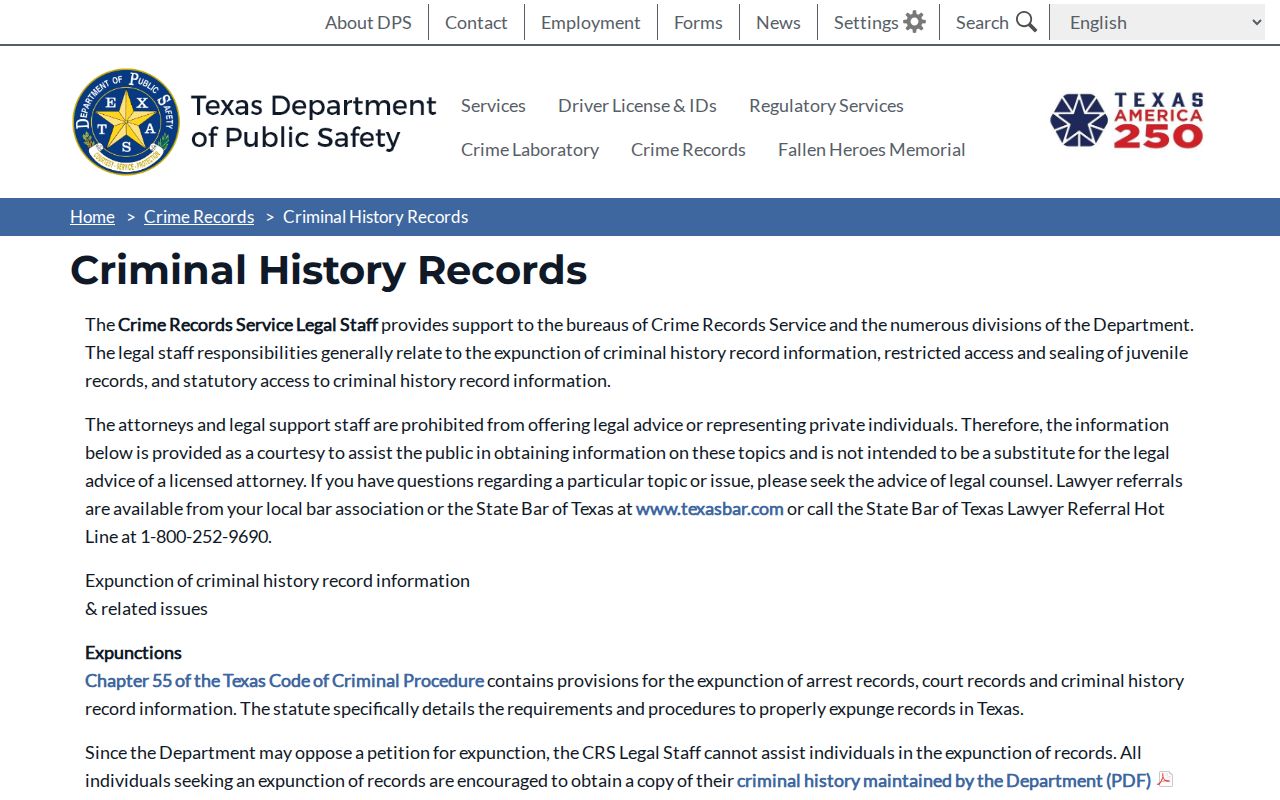
The image connects the statewide correction process to local source records. If a Moore County outcome is wrong or missing, identify the fingerprint-linked arrest cycle, then obtain the actual judgment, dismissal, or other certified disposition from the clerk. Ask the arresting agency or clerk to correct its submission when the source data is wrong.
After an expunction order becomes final, every known repository, jail, arresting agency, prosecutor, clerk, and recipient should be correctly listed. Recheck the DPS fingerprint record and local court systems after processing time. Send a certified order to a custodian that still displays stale data. Correcting only a downstream copy will not repair the originating Moore County criminal record.
City-by-City Criminal Records in Moore County
Moore County has three incorporated cities. Their police departments create local incident and arrest reports, and their municipal courts keep ordinance and fine-only case files. Custodial arrests generally move to the county jail, while higher charges move to the appropriate Moore County court. Start at the city for the original report, then follow the record to the county or state layer.
Dumas Record Check
14,501 residents in 2020. Dumas PD and Municipal Court keep distinct city records.
Cactus Record Check
3,179 residents in 2020. Cactus police reports stay with the city.
Sunray Record Check
1,707 residents in 2020. City Hall routes police and municipal court requests.
Dumas is also the county seat, but that does not merge city and county files. A Dumas citation may remain at Municipal Court while a county booking sits with the sheriff and a later Class A or B charge reaches the County Court at Law.