
Moore County Sex Offender Checks
The Texas Public Sex Offender Registry is the main public search channel for Moore County. Texas Department of Public Safety receives registration data from local registration authorities and makes the lawful public fields searchable without charge. Start with the county filter when the goal is a broad Moore County registry check. Then repeat the query by Dumas, Cactus, Sunray, ZIP code, street, or a person's name. Mailing addresses and city limits do not always match, so a single geographic filter can miss a relevant result near a border.
The official DPS registry search screen shows the public starting point for a Moore County sex offender check.
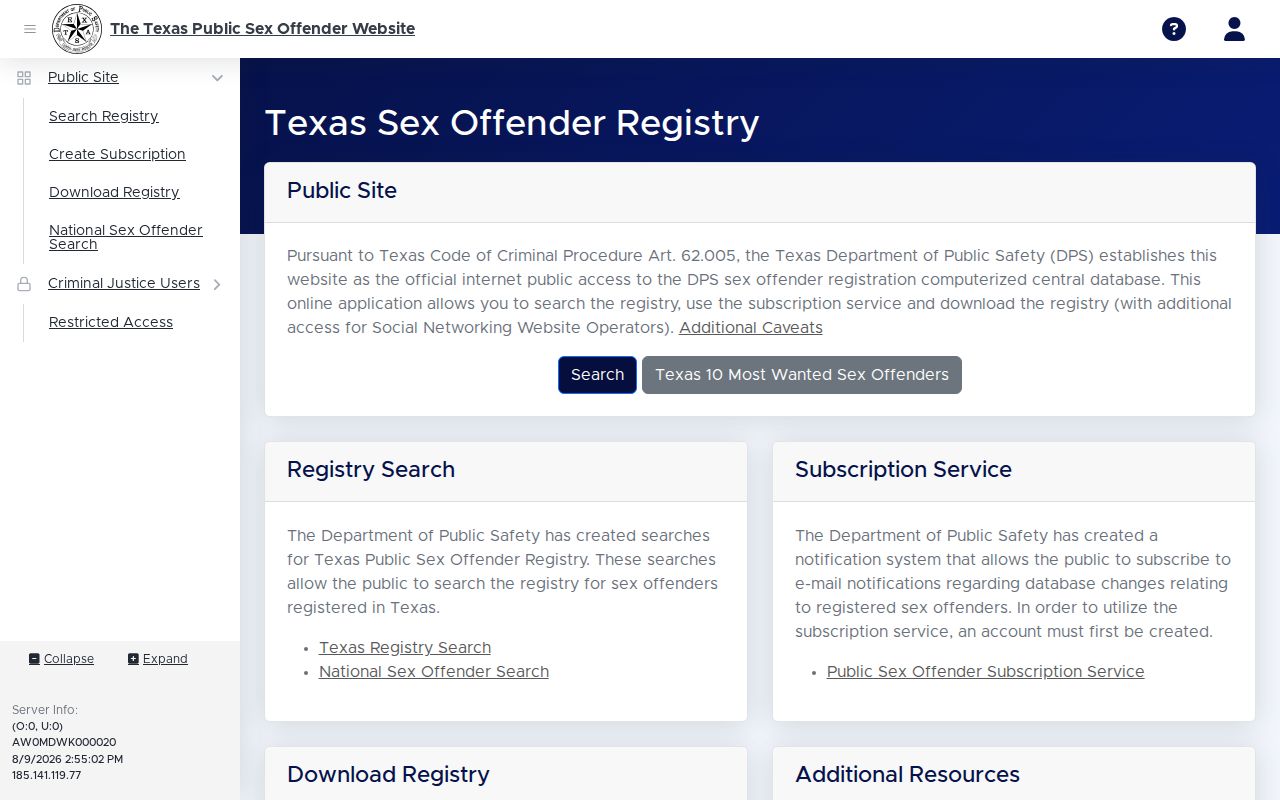
The interface offers several routes into the same statewide data, which is why both Moore County and local place searches matter. A map pin is not a full record. Open the profile and compare the listed name, aliases, photograph, physical description, offense information, address type, compliance status, and verification details. Never treat a same-name result alone as proof of identity.
Moore County Registry Search Routes
A Moore County registry search works best as a set of overlapping checks. Moore County selection catches entries assigned to the county, while city and ZIP searches help with Dumas, Cactus, and Sunray addresses. Address and map tools add location context. Name search is useful when the spelling is known, but aliases and spelling differences can affect matches. Keep the query broad at first, then narrow it with details drawn from a profile.
Use the same process when looking near a school route, family address, or regular destination. Search the exact street area and nearby municipalities, but do not assume the map establishes a legal boundary or a local restriction. Official local contact pages for Dumas Police, Cactus Police, and Sunray City Hall can help identify the right law-enforcement office when the location lies inside a city. If a registry search appears incomplete, contact DPS or that authority instead of using an unofficial people-search site.
Note: A blank city search is not a certified statement that no registrant lives near a Moore County mailing address.
Texas Public Sex Offender Registry Searches
DPS runs the statewide registry under the Texas Sex Offender Registration Program. A Moore County search does not require a paid account. Follow a repeatable sequence so place boundaries and similar names do not end the review too soon.
- Open the official DPS registry and read its conditions and warning about lawful use.
- Select Moore County for a county-wide result set, then repeat by Dumas, Cactus, Sunray, city, ZIP, or street when those paths fit the search.
- Use a name query when a person is known, and compare aliases, photograph, physical traits, and offense data before deciding that a result matches.
- Open the complete public profile. Check address type, registration or compliance information, last verification details, and the source authority before relying on the result.
The current Moore County registry lookup controls documented by DPS are summarized below. A field is path-specific when it is required only for that form of search.
| Field or Control | Type | Required | Use |
|---|---|---|---|
| Search by Name | Tab and text | Path-specific | Uses first and last name; check live partial-name behavior. |
| Search by Address | Address form | Path-specific | Uses a street or place with city or ZIP context. |
| Search by County | Selection | Path-specific | Select Moore County for the county-wide view. |
| City or ZIP | Selection or text | Optional path | Repeat with Dumas, Cactus, Sunray, or the relevant ZIP. |
| Map Search | Map control | Optional | Shows geographic results based on reported and geocoded addresses. |
| Search and Clear | Buttons | Not applicable | Runs a query or resets the entered criteria. |
Moore County Registration Pipeline
Moore County registration and the DPS public database are two parts of one system. A registrant reports to the authority assigned under Texas law. That local authority records and verifies required information, then transmits it to DPS for statewide use. For people assigned outside a city arrangement, the Moore County Sheriff's Office is the county contact. Call 806-935-4145 to identify the correct registration officer, appointment location, and current reporting schedule. Moore County posts no separate registry-office hours or local fee.
The DPS program overview explains the state and local roles in registration and notice.
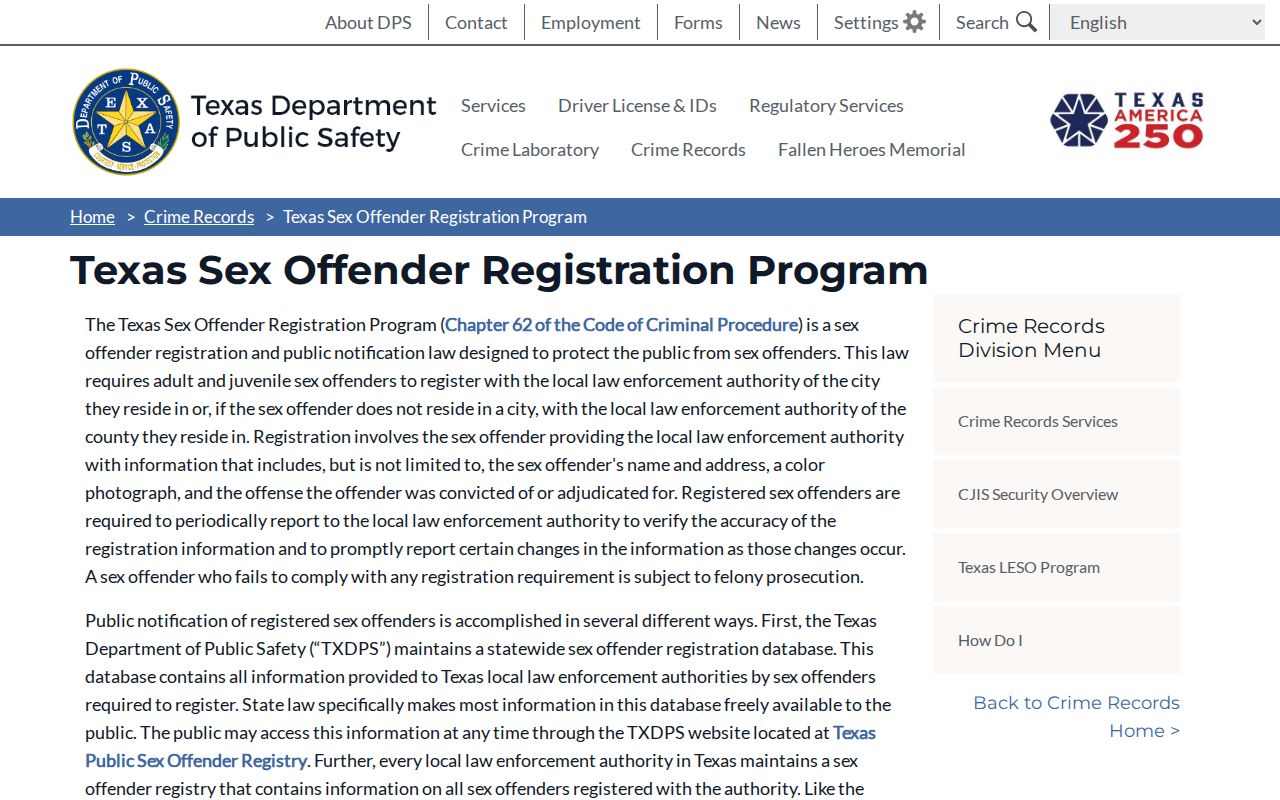
This state overview matters when a Moore County profile seems late or wrong. The local authority verifies the report, but DPS operates the public statewide display. A person who spots a possible compliance problem should report it to law enforcement, not try to investigate or confront the listed person. Give the officer the profile link, the observed issue, and the time and place tied to the concern. That lets the proper authority compare the report with nonpublic registration material.
Registry Profiles: What They Show
A Moore County public registry profile is a narrowed safety record, not the full registration file. DPS collects a wider set of identity and contact data than it releases. The agency's criminal-history and registration FAQ identifies important public and nonpublic fields. The public view excludes social security and driver license numbers, phone numbers, online identifiers, employer contact information, victim identity, and other DPS-only data. A court can also order qualifying juvenile information nonpublic.
The official DPS profile layout illustrates the field groups without requiring an unofficial copy of a person's listing.
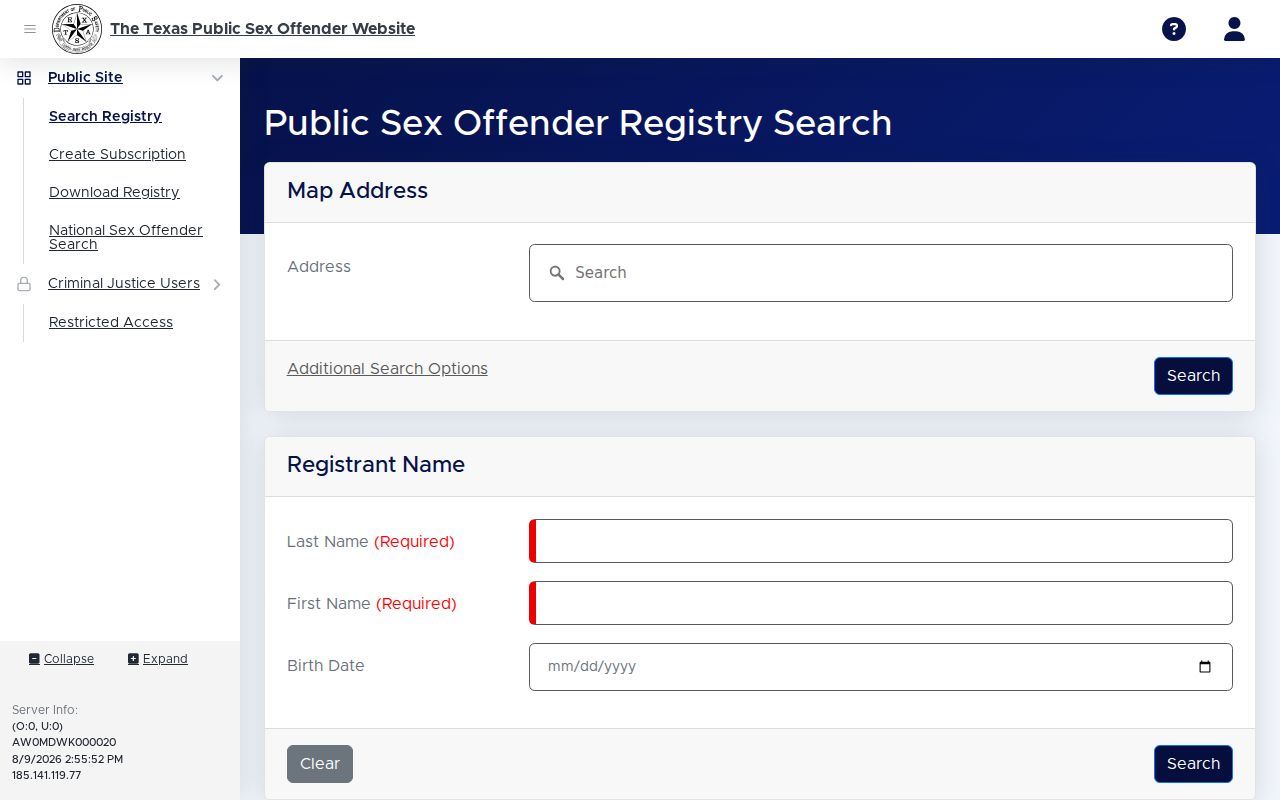
The Moore County profile layout separates public identity, offense, location, and registration facts so the reader can confirm more than a name.
| Name and Aliases | Public name and known aliases used to distinguish similar results. |
|---|---|
| Photo and Description | Current photograph when supplied, plus sex, race, height, weight, hair, eyes, and other public traits. |
| Address Information | Public residence or geographic description and the address type shown by DPS. |
| Offense Information | Reportable offense, conviction or adjudication date, punishment, and victim-age information without identifying the victim. |
| Registration Status | Compliance and verification information, supervision facts, and other public registration details when authorized. |
| Other Public Fields | Vehicle or higher-education affiliation information where Texas law permits public display. |
Note: A profile can answer who is registered and why, but it does not release the victim's identity or the complete law-enforcement file.
Moore County Map Search Limits
Registry maps turn reported addresses into geographic points. That is useful, but the point depends on the address supplied and the way the system geocodes it. A rural description may not behave like a numbered city address. Postal labels can also name one city while the actual property sits elsewhere. Search Moore County first, then repeat with the closest city, ZIP, and street. This is especially useful around Dumas, Cactus, Sunray, and unincorporated areas.
Do not use the map to invent a residence rule. Texas public registration is not presented as one statewide distance circle that applies in every place and every case. The Moore County research did not establish a county-wide residency-distance ordinance or a single local map that decides where a registrant may live. A Moore County location question should go to the local registration authority, and any court or supervision condition must be read from its actual order.
Registration Levels and Duties in Texas
Texas does not organize a Moore County public registry entry around a simple Tier I, Tier II, and Tier III label. Chapter 62 ties duration and verification duties to the reportable offense, date, repeat status, and other statutory facts. Adults generally register for ten years after discharge or for life. Certain sexually violent offenses, repeat categories, and other listed offenses bring lifetime registration. Juvenile, federal, and out-of-state matters have special rules, so the public profile and governing law must be read together.
| Texas Category | Duration | Verification Framework |
|---|---|---|
| Enumerated lifetime or repeat category | Life | Many verify annually; specified categories report every 90 days or on another statutory schedule. |
| Other adult reportable conviction or adjudication | Generally ten years after release or discharge | Frequency follows the applicable Chapter 62 category and profile instructions. |
| Juvenile registrant | Special court and statutory rules | A court may exempt, defer, or make information nonpublic. |
| Out-of-state or federal registration | Depends on the Texas duty | Substantially similar offense and supervision facts can control. |
Changes to an address, name, physical health, phone, work or education status, and online identifiers can trigger reports under the governing schedule. Failing to comply is a felony. Verification may be annual, every 90 days, twice yearly, or on another schedule that fits the statutory category. That is why a reader should not translate the duration row into a made-up risk level.
Moore County and NSOPW Searches
The DPS registry is the right source for Texas detail. The National Sex Offender Public Website, maintained by the U.S. Department of Justice, adds a cross-state layer. It federates participating public registries, making it useful when a person may have moved across a state line or when a search area extends beyond Moore County. NSOPW does not replace the Texas profile. Return to the source registry for the most detailed state record and the state-specific warning.
The national interface offers a separate official entry point for searches that reach beyond Moore County.
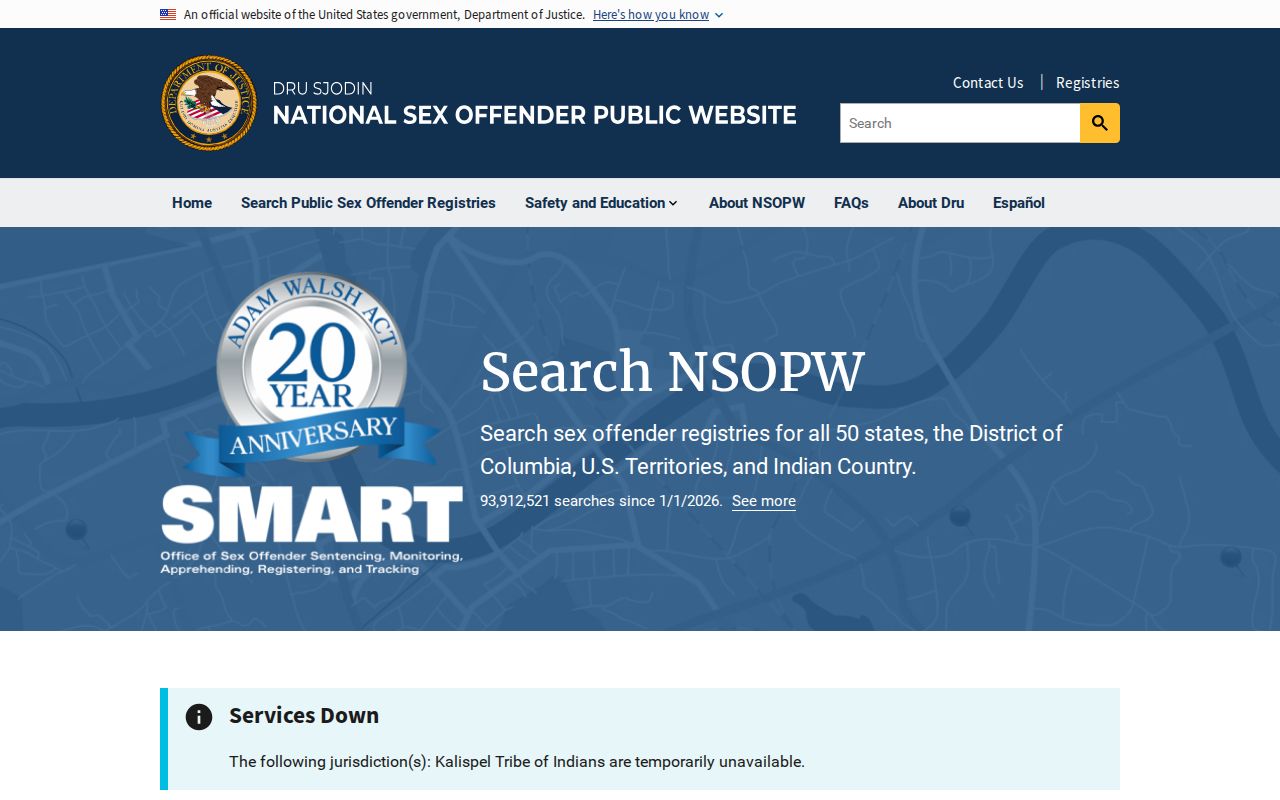
Use both layers when travel, a former address, or a nearby state may matter. Compare public identifiers and follow the link back to the contributing jurisdiction. Differences in a Moore County search can reflect update timing, local field rules, or a record that belongs to another state rather than an error in Moore County.
Report Moore County Registry Errors
An apparent address problem or stale status should go to an official authority. Do not visit the address or confront anyone. For a Moore County registration matter outside a city arrangement, call the Sheriff's Office at 806-935-4145 and ask for the registration officer. For an immediate threat, use the appropriate emergency channel. DPS can address questions about the statewide display, while local law enforcement can investigate suspected failure to report.
Save the public profile URL and note the field that seems wrong. Describe what raised the concern without adding rumors. An officer can compare the public display with the protected registration file and current reporting schedule. The public cannot see every identifier that DPS or the registration officer holds, so a suspected mismatch is a lead for verification, not proof of noncompliance.
Using Registry Information Lawfully
Texas makes most registration information public to support awareness and safety planning. DPS keeps the statewide website available, local authorities maintain registration records, and state law permits forms of local publication. DPS may mail postcards to nearby residences and businesses when a high-risk offender or a civilly committed sexually violent predator moves into a community. Those official notices do not authorize private punishment or public confrontation.
Registry misuse can lead to prosecution: Texas Code of Criminal Procedure Chapter 62 governs public registry information. DPS warns that using it to harass, injure, threaten, or commit a crime may result in criminal prosecution.
Use a Moore County registry lookup to plan sensible safety steps, verify an official notice, or understand the public record. If a Moore County profile causes concern, report the facts to law enforcement. Do not post protected details, seek victim information, or infer facts that the profile does not state. The registry identifies a statutory registration duty. It does not grant permission for vigilantism, and it should not replace direct help from police when a real threat exists.